

Bede Grey
Author's posts
Mass for Survivors of Clerical Abuse

There will be a Mass of hope and healing for survivors and all those impacted by abuse, and dedication of a plaque, on Saturday 2nd May at 11:15 am in the Abbey Church at Ealing Abbey.
All parishioners and others very welcome.
Prayer for Survivors of Abuse
God of endless love,
ever caring, ever strong, always present, always just:
You gave your only Son
to save us by His blood on the Cross.
Gentle Jesus, shepherd of peace,
join to yur own suffering
the pain of all who have been hurt
in body, mind, and spirit,
by those who betrayed the trust placed in them.
Hear the cries of our brothers and sisters
who have been gravely harmed,
and the cries of htose who love them.
Soothe their restless hearts with hope,
steady their shaken spirits with faith.
Grant them justice for their cause,
enlightened by your truth.
Holy Spirit, comforter of hearts,
heal your people’s wounds
and transform brokenness into wholeness.
Grant us the courage and wisdom, humility and grace,
to act with justice.
Breathe wisdom into our prayers and labours.
Grant that all harmed by abuse may find peace in justice.
We ask this through Christ our Lord.
Amen.
Easter Triduum Services 2026
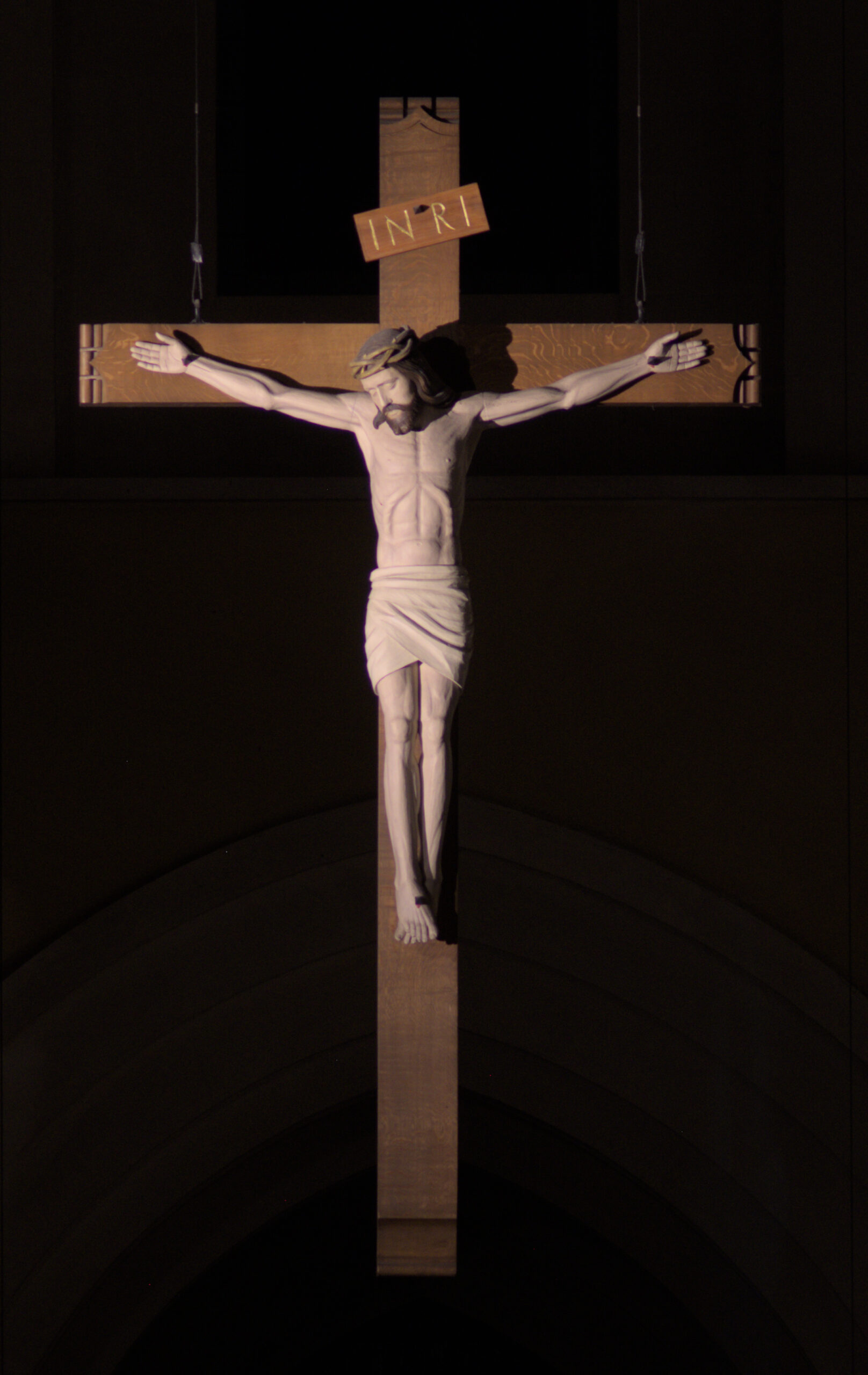
The Easter Triduum is the most important time in the Church’s year. It runs from the Mass of the Lord’s Supper to the Easter Vigil. The Triduum (‘three days’) is really one long liturgy from Thursday to Sunday. The Last Supper, the Crucifixion, and then waiting and praying on Holy Saturday receive the crowning glory of the Resurrection at the Paschal Vigil.
Our services in the Abbey Church at this most holy time are listed below.
Maundy Thursday
NB: The only Mass today is the evening Mass of the Lord’s Supper.
| 6:00 am | Matins |
| 7:35 am | Lauds |
| 3:30 -5:30 pm | Confessions |
| 6:30 pm | Mass of the Lord’s Supper |
| until Midnight | Watching at the Altar of Repose |
Good Friday
| 8:30 am | Tenebrae |
| 12 Noon | Chidren’s Passion Liturgy |
| 3:00 pm | Celebration of the Passion of the Lord |
| followed by | Veneration of the Cross |
| 4:45 – 6:45 pm | Confessions |
| 7:00 pm | The Seven Last Words |
| 8:00 pm | Stations of the Cross |
| followed by | Veneration of the Relic of the True Cross |
Holy Saturday
| 8:30 am | Tenebrae |
| 10:00 – 11:00 am | Confessions |
| 11:00 am | Blessing of Easter Eggs and Baskets (Bulbeck Room) |
| 4:00 – 6:00 pm | Confessions |
| 6:30 pm | Vespers |
| 9:00 pm | Paschal Vigil |
Easter Sunday
On Easter Sunday the monks celebrate Lauds in the House Chapel.
Note that there is an extra Mass at 8 am. The midday Mass starts at 12:15 pm (not noon).
| 8:00 am | Mass |
| 9:00 am | Mass |
| 10:15 am | Family Mass in the Parish Hall |
| 10:30 am | Monastic Conventual Mass (Pontifical) |
| 12:15 pm | Mass |
| 6: 00 pm | Pontifical Vespers |
| 7:00 pm | Mass |
Easter Monday
There is no 7 am Mass on Easter Monday.
Compline will be prayed privately.
| 7:25 am | Matins |
| 8:45 am | Lauds |
| 9:15 am | Monastic Conventual Mass |
| 6:00 pm | Mass |
| 6:30 pm | Vespers |
Tuesday – Saturday of the Easter Octave
Service times as normal except that Compline will be prayed privately.
Vacancy
Safeguarding Lead
Part-Time (0.4fte – 14 hrs per week) Permanent

The Trust of St Benedict’s Abbey, Ealing, wishes to appoint a Safeguarding professional as a permanent position to continuously ensure that Ealing Abbey and its works are comprehensively assured to be safe environments for all.
The post is to be the Safeguarding lead responsible for ensuring the highest standards of safeguarding across all activities of Ealing Abbey. It is to promote an effective culture of safeguarding that protects the health and wellbeing of everyone who comes into contact with the Abbey, ensuring they can live free from harm and abuse. It is to support victim survivors, helping to bring their voices to the forefront in all our safeguarding work.
The role is to assist the Safeguarding Trustee, providing strategic leadership, policy oversight, governance, and cultural development in safeguarding. It is to ensure compliance with national legislation and the “One Church” Approach of the Catholic Church of England and Wales articulated through the Catholic Safeguarding Standards Agency (CSSA) within the safeguarding framework of the
Abbey charitable trust.
This part-time role allows for flexible working hours appropriate for fulfilling the responsibilities outlined in the job description. There is the possibility for hybrid working.
Salary of between £40-48k fte depending on experience.
Required from June 2026
To apply:
Download a job description and an application form.
These are also available on request from the monastery:
Email: info:@ealingabbey.org.uk
Telephone: 020 8194 2300 (reception)
The closing date for applications is Friday, 10th April, 11.59pm with interviews in person in April 2026.
Ealing Abbey is committed to safeguarding and promoting the welfare of children, young people, and vulnerable adults. All staff must adhere to the policies of the Catholic Church in England and Wales for safeguarding children, young people, and vulnerable adults. In line with our safeguarding policy, some employees and volunteers working in specific roles at the Abbey will be subject to satisfactory clearance being obtained from the Disclosure and Barring Service (DBS). As this work involves regulated activity with children, this appointment is subject to a satisfactory Enhanced DBS check. The check will be undertaken as part of the appointment process with the successful candidates. In the event of an offer of employment being made, we will take up references and reserve the right to validate all information entered on the application form.
Registered Charity No: 242715
Christmas Services 2025
Please note the times of Sevices over the Christmas period. All services are also live-streamed.
The Abbot and all the monks wish you all a happy and holy Christmas.

Wednesday 24th December – Christmas Eve
Please note there is no 6 pm Mass today.
| 6 am | Matins |
| 7 am | Monastic Conventual Mass |
| 7:35 am | Lauds |
| 9:15 am | Mass |
| 10 am-12 noon | Confessions |
| 3 pm | Blessing of the Crib |
| 6 pm | Solemn Vespers |
| 8 pm | First Mass of Christmas |
| 11 pm | Matins |
| 11:30 pm | Carols |
| 12 midnight | Midnight Mass |
Thursday 25th December – Christmas Day
Please note there is no evening Mass today. There is an extra Mass at 8 o’clock in the morning.
| 8 am | Mass |
| 9 am | Mass |
| 10:15 am | Family Mass in the Parish Hall |
| 10:30 am | Monastic Conventual Mass |
| 12:15 pm | Mass |
| 6 pm | Pontifical Vespers |
Friday 26th December – St Stephen
Please Note there will be no 7 am Mass, no Exposition of the Blessed Sacrament, and no Confessions today.
| 6:30 am | Matins |
| 7:35 am | Lauds |
| 9:15 am | Monastic Conventual Mass |
| 5:15 pm | Vespers |
| 6 pm | Mass |
Saturday 27th December – St John
| 6:30 am | Matins |
| 7 am | Mass |
| 7:35 am | Lauds |
| 9:15 am | Monastic Conventual Mass |
| 5:15 pm | Vespers |
| 6 pm | Mass |
Sunday 28th December – The Holy Family
| 7:35 am | Lauds |
| 9 am | Mass |
| 10:15 am | Family Mass in the Parish Hall |
| 10:30 am | Monastic Conventual Mass |
| 12 Noon | Mass |
| 6 pm | Vespers |
| 7 pm | Mass |
Monday 29th December – St Thomas Becket
| 6 am | Matins |
| 7 am | Monastic Conventual Mass |
| 7:35 am | Lauds |
| 9:15 am | Mass |
| 5:15 pm | Vespers |
| 6 pm | Mass |
Tuesday 30th December – 6th Day of Christmas
| 6 am | Matins |
| 7 am | Monastic Conventual Mass |
| 7:35 am | Lauds |
| 9:15 am | Mass |
| 6 pm | Mass |
| 6:35 pm | Vespers |
Wednesday 31st December – 7th Day of Christmas (New Year’s Eve)
| 6 am | Matins |
| 7 am | Monastic Conventual Mass |
| 7:35 am | Lauds |
| 9:15 am | Mass |
| 5:15 pm | Vespers |
| 6 pm | Mass |
| 10-11 pm | Confessions |
| 10-11:30 pm | Exposition of the Blessed Sacrament |
| 11:30 pm | Mass |
Thursday 1st January – Mary, Mother of God (New Year’s Day)
Today is the World Day of Prayer for Peace. There is Exposition of the Blessed Sacrament from 10 am until 5 pm.
| 6:30 am | Matins |
| 7 am | Mass |
| 7:35 am | Lauds |
| 9:15 am | Monastic Conventual Mass |
| 10 am – 5 pm | Exposition of the Blessed Sacrament |
| 5:15 pm | Vespers |
| 6 pm | Mass |
Friday 2nd January – Ss Basil the Great and Gregory Nazianzen
| 6 am | Matins |
| 7 am | Monastic Conventual Mass |
| 7:35 am | Lauds |
| 9:15 am | Mass |
| 6 pm | Mass |
| 6:35 pm | Vespers |
Saturday 3rd January
| 6:30 am | Matins |
| 7 am | Mass |
| 7:35 am | Lauds |
| 9:15 am | Monastic Conventual Mass |
| 5:15 pm | Vespers |
| 6 pm | Mass |
Sunday 4th January – 2nd Sunday of Christmas
| 7:35 am | Lauds |
| 9 am | Mass |
| 10:15 am | Family Mass in the Parish Hall |
| 10:30 am | Monastic Conventual Mass |
| 12 Noon | Mass |
| 6 pm | Vespers |
| 7 pm | Mass |
Monday 5th January
| 6 am | Matins |
| 7 am | Monastic Conventual Mass |
| 7:35 am | Lauds |
| 9:15 am | Mass |
| 5:15 pm | Vespers |
| 6 pm | Mass |
Tuesday 6th January – The Epiphany of the Lord
| 6:30 am | Matins |
| 7 am | Mass |
| 7:35 am | Lauds |
| 9:15 am | Mass |
| 5:15 pm | Vespers |
| 6 pm | Monastic Conventual Mass |
| 8 pm | Mass |
Vacancy
Director of Music
The Abbey of St Benedict, London, wishes to appoint a Director of Music to lead the Catholic choir of Ealing Abbey, and to contribute to the development of the Abbey’s sacred music programme in September 2026.
Founded in 1897, the Abbey maintains a high standard of liturgical and musical worship within the Catholic Benedictine tradition and this role offers the opportunity to work in a context where the choral tradition is taken seriously, and where music plays a central role in the liturgical expression of the church. Following the exceptional twenty-year tenure of the current Director, the post will suit a gifted musician who brings artistic sensitivity, professional focus, and a desire to maintain and develop a well-established tradition of excellence in church music.
The part-time role requires hours appropriate for fulfilling the responsibilities outlined in the job description. There is flexibility built in to support the growth and development of the position over time.
Subsidised accommodation available as part of a competitive salary package.
Further information
Or contact the Abbot’s Secretary:
Telephone: 020 8194 2300
info@ealingabbey.org.uk
Closing date for applications:
Wednesday 7th January, 11.59pm
Completed applications should be emailed to:
info@ealingabbey.org.uk
Appointment is subject to enhanced DBS Disclosure.
Registered Charity No: 242715
Dom Bede Ordained to the Priesthood
(All photos on this page are copyright Damian Walker.)
On 27th September, Dom Bede was ordained to the priesthood after 9 years in the monastery. His ordination comes after six of studies at Oxford Blackfriars.

Bishop James Curry presided at the ordination. In his homily, Bishop James referred to Bede’s experiences prior to joining the monastery and to the meaning of the Benedictine vows. He reminded us that everything a monk does is part of his spiritual life, whether praying the Divine Office or doing the washing up. Although Dom Bede was ordained to the priesthood, he remains a monk. The monk’s life is a school of prayer which nourishes the priestly ministry.
The Ordination

The service started with a procession from the monastery through the street to the church. Sr Kathleen of the Resurrection Sisters read the first reading (Isaiah 61:1-3) and Bede’s cousin Maria read the second reading (2 Corinthians 4:1-2, 5-7). The Carmelite Deacon Chidiebere Ezeakacha OCD, who is also studying at Blackfriars Oxford, proclaimed the Gospel (John 15:9-17).
Then came the Rite of Ordination. This comprises a questioning and the homily by the Bishop, and then promises by Dom Bede to carry out his duties. After this comes the Litany of Saints, where we call on the saints to pray for us. Following this, the Bishop and then all the other priests laid their hands on Dom Bede’s head, passing on the Holy Spirit. Then the Bishop prayed the prayer of consecration before Fr Alexander dressed Bede in the stole and chasuble. Bishop James then anointed Bede’s hands before Bede received the chalice and paten for the Mass. The Bishop and Fr Bede then exchanged the kiss of peace, and then all the other priests also gave Bede the kiss of peace.


Following this, Mass continued as normal, with Fr Bede and Abbot Dominic as principal concelebrants alongside the Bishop. The Mass ended with Fr Bede giving his first blessing to the Bishop. This is something that happens at the end of every ordination to the priesthood; the newly-ordained priest blesses the Bishop who ordained him.
Blessings and Celebration
After the Mass, there was a celebration in the Parish Hall, while Fr Bede was giving his First Blessing to people.


Your Views on Safeguarding — Call for Information
Your views on safeguarding can help make the Church a safer place.
The Catholic Safeguarding Standards Agency (CSSA) is undertaking a thematic inspection focusing on current survivor engagement and support across Catholic dioceses and Religious Life Groups in England and Wales. This is the first of its kind for the CSSA. The aim to identify and share best practice and areas for improvement across church bodies.

You can help the CSSA by filling out this survey. The survey is anonymous unless you choose to provide contact details. (It is not necessary to provide any contact details.) This survey takes about half an hour to complete.
Your response to the survey will help the Catholic Safeguarding Standards Agency advise all parishes and religious groups (such as monasteries) to have the best safeguarding standards possible. The CSSA will collate information from across the country. It will then be able to see what works well and what ideas can be suggested to all parishes. That way, your views on safeguarding can help make the Church a safer place.
Find out more about the Catholic Safeguarding Standards Agency.
Thank you for helping make the Church a safer place for all.
Dom Bede to be Ordained to the Priesthood
Brother Bede will be ordained to the priesthood on Saturday 27th September. The Mass will start at 1 pm in the Abbey church. The Right Reverend James Curry, auxiliary bishop of Westminster, will be the ordaining bishop.

Priestly ordination is the culmination of a long journey for Brother Bede. It follows six years of study at Blackfriars Studium, Oxford, a seminary run by the Dominicans. Although not all monks become priests, most monks in the English Benedictine Congregation are ordained. Dom Bede will be ordained in the Abbey Church in front of family, friends, the monastic community, and the parish community.
Please pray for Brother Bede as he starts this new phase in his monastic life.
You can read more about the monastic formation process here.
Monastic Community Retreat
The monastic community is on retreat this week from Monday evening, 18th August, until Saturday morning, 23rd August. The monastic community retreat is a time when we try to step back from our usual day-to-day activities in the parish and our other works, focussing on our relationship with God. Although we are still available for emergencies, we ask that less urgent matters wait until after Saturday.
For a reflection on why monks need a time of retreat, see this post.

During the retreat, the Conventual Mass is at 9.15 every morning, rather than 7 am.
At the end of the retreat, we renew our monastic vows at the Conventual Masss on Saturday 23rd August.
Thank you for respecting our retreat time.
Your Survivor Experience – Safeguarding Agency Call for Information
The Catholic Safeguarding Standards Agency (CSSA) is conducting a thematic inspection on survivor engagement and support across Religious Life Groups (RLGs) and dioceses of the Catholic Church.
Through a public survey/public call out we invite survivors to contribute their experiences of contact with the Catholic Church following abuse. The experiences may be new or ongoing, as well as those connected to non-recent abuse. The information will be used to gain a better understanding of survivor’s experience with church bodies, share best practice and to develop ways to improve this experience for both survivors and church leaders.
We would like to share these two links:
This process is being conducted with transparency, respect, and in a survivor-centred way. We would like to hear from as many voices as possible, enabling us to identify good practice and areas for improvement across the Church.
Book Review of ‘Hope,’ the Autobiography of Pope Francis
Come along to a Book Review and Discussion of ‘Hope’ by Pope Francis, held at the Maurice Fowler Hall of Ealing Abbey, on Saturday 21st June.
In January, Pope Francis published his autobiography. Originally, heintended it to be published after his death, but then decided to release it to coincide with the 2025 Jubiliee year of Hope.
This is the first time a sitting Pope has published ab autobiography. Pope Francis writes about his life, from growing up as a child of immigrant parents in Argentina to the challenges of his papacy. He discusses his personal passions for football and tango, his vocation, and his life in the Church. The Pope also writes about the problems of the modern world, including the conflicts in the Ukraine and the Middle East, the environmental crisis, and the future of the Church.
Pope Francis died three months after the publication of ‘Hope,’ making it a complete autobiography of his life.

HOPE is an independent group that meets to look at the signs of further progress in the Safeguarding in the Catholic Church. HOPE is hosting a Book Review and Discussion of ‘Hope’ by Pope Francis. All are welcome to come along for a friendly chat and share responses to the book.
After the discussion there will be a ‘bring-and-share’ lunch.
Details
| Date | Saturday 21st June 2025 |
| Time | 10:30am to 12:30pm |
| Place | Maurice Fowler Hall, entrance to the right of No 1 Montpelier Avenue, Ealing W5 2XP |
You can purchase ‘Hope’ by Pope Francis here.
Habemus Papam!

Pope Leo XIV (Robert Cardinal Prevost) Image © Reuters
‘Annuntio vobis gaudium magnum; habemus papam.’
‘I announce to you great joy; we have a pope.’ This is the start of the announcement made Cardinal Protodeacon Dominique Mamberti, the senior cardinal in the Order of Deacons. (Despite the title, Cardinal Mamberti is, as are most cardinals, a priest and a bishop.)
At 8 minutes past 5 in the afternoon, UK time, white smoke came from the chimney erected on the Sistine Chapel. This was the signal we had been waiting and praying for, telling us that a new Pope has been elected. He was elected on the fourth ballot of the cardinals in the conclave.

Image © Vatican News
Cardinal Prevost has been elected as Pope. Robert Cardinal Prevost has taken the name Leo. He is the 14th Pope to be named Leo, so will be known as Pope Leo XIV. Pope Leo is the 267th in a line going back nearly 2000 years, when the risen Jesus commanded Peter, ‘Feed my lambs,’ ‘Tend my sheep,’ ‘Feed my sheep’ (John 21:15, 16, 17). All popes are the successor to St Peter.
Pope Leo Addresses the Crowd in St Peter’s Square
The new Pope started his speech from the Vatican balcony with the words ‘Peace be with you,’ something urgently needed in these troubled times. These words were the first words of Jesus to the apostles after His Resurrection (John 20:19).
In his speech, the Pope thanked Pope Francis, as well as the cardinals who elected him. He said we all need the light of Christ. Pope Leo called for a missionary Church that will build bridges between people.
Read the full text of the speech.
Who is the New Pope?
Although he was born in Chicago, Pope Leo has spent over half of his life based outside the USA. He was born in September 1955 and joined the Augustinians at the age of 22. Pope Leo is the first Pope from the Order of St Augustine. In June 1982 he was ordained as a priest. Three years later he moved to Peru as part of the Augustinian mission there.

The white smoke starts to appear from the Sistine Chapel. Image © Reuters
While in Peru he was head of the Augustinian seminary and taught canon law at the diocesan seminary. In 1998 he was elected as Provincial of the Chicago Province of the Order of St Augustine. Three years later, he was elected as Prior General of the Order, and moved to Rome. He served two six-year terms as Prior General.
In December 2014 he was consecrated as a bishop and in September 2015 he became bishop of Chiclayo in Peru. He had already been the Apostolic Admninistrator of the diocese. Pope Francis made him Prefect (head) of the Dicastery for Bishops in January 2023 and he became a cardinal in the following September.
We pray for our new Pope as he takes over the leadership of the Church.
Full Text of the Speech
“Peace be with all of you!
Dearest brothers and sisters, this is the first greeting of the Risen Christ, the good shepherd who gave his life for God’s flock. I too would like this greeting of peace to enter your heart, to reach your families, to all people, wherever they are, to all peoples, to the whole earth. Peace be with you!
This is the peace of the Risen Christ, an unarmed and disarming peace, humble and persevering. It comes from God, God who loves us all unconditionally. We still have in our ears that weak but always courageous voice of Pope Francis who blessed Rome!
The pope who blessed Rome gave his blessing to the world, to the entire world, that Easter morning.
Allow me to follow up on that same blessing: God cares for us, God loves all of us, and evil will not prevail! We are all in God’s hands. Therefore, without fear, united hand in hand with God and among ourselves, let us move forward.
We are disciples of Christ. Christ goes before us. The world needs His light. Humanity needs Him as the bridge to reach God and His love.
Help us too, then help each other to build bridges – with dialogue, with encounter, uniting all of us to be one people always in peace. Thank you, Pope Francis!
I also want to thank all the fellow cardinals who chose me to be the Successor of Peter and to walk with you, as a united Church always seeking peace, justice – always trying to work as men and women faithful to Jesus Christ, without fear, to proclaim the Gospel, to be missionaries.
I am a son of Saint Augustine, (an) Augustinian, who said: “With you I am a Christian and for you a bishop.” In this sense, we can all walk together towards that homeland that God has prepared for us.
To the Church of Rome, a special greeting! We must seek together how to be a missionary Church, a Church that builds bridges (and) dialogue, always open to receive (people), like this square, with open arms – everyone, all those who need our charity, our presence, dialogue and love.
(Switching into Spanish) And if you allow me also, a word, a greeting to all those, and particularly to my beloved diocese of Chiclayo, in Peru, where a faithful people have accompanied their bishop, have shared their faith, and have given so much, so much to continue being a faithful Church of Jesus Christ.
(Switching back to Italian) To all of you, brothers and sisters of Rome, of Italy, of the whole world, we want to be a synodal Church, a Church that walks, a Church that always seeks peace, that always seeks charity, that always seeks to be close especially to those who suffer.
Today is the day of the Supplication to Our Lady of Pompeii. Our Mother Mary always wants to walk with us, to stay close, to help us with her intercession and her love.
So I would like to pray together with you. Let us pray together for this new mission, for the whole Church, for peace in the world, and let us ask for this special grace from Mary, our Mother.”
Mass for Survivors of Clerical Abuse
There will be a Mass for survivors of clerical abuse on Saturday 17th May at 11:15 am in the Abbey Church at Ealing Abbey.
This is an opportunity to come and pray for those have been abused.
The Mass has been organised by HOPE, a group which meets regularly to look at the signs of hope and further progress in the Safeguarding of those in the Catholic Church and elsewhere.
Prayer for Survivors of Abuse
God of endless love,
ever caring, ever strong, always present, always just:
You gave your only Son
to save us by His blood on the Cross.
Gentle Jesus, shepherd of peace,
join to yur own suffering
the pain of all who have been hurt
in body, mind, and spirit,
by those who betrayed the trust placed in them.
Hear the cries of our brothers and sisters
who have been gravely harmed,
and the cries of htose who love them.
Soothe their restless hearts with hope,
steady their shaken spirits with faith.
Grant them justice for their cause,
enlightened by your truth.
Holy Spirit, comforter of hearts,
heal your people’s wounds
and transform brokenness into wholeness.
Grant us the courage and wisdom, humility and grace,
to act with justice.
Breathe wisdom into our prayers and labours.
Grant that all harmed by abuse may find peace in justice.
We ask this through Christ our Lord.
Amen.

Mass Details
Date: Saturday 17th May 2025
Time: 11:15 am
Place: Ealing Abbey Church
Easter Triduum Services 2025
The Easter Triduum is the most important time in the Church’s year. It runs from the Mass of the Lord’s Supper to the Easter Vigil. The Triduum (‘three days’) is really one long liturgy from Thursday to Sunday. The Last Supper, the Crucifixion, and then waiting and praying on Holy Saturday receive the crowning glory of the Resurrection at the Paschal Vigil.
Our services in the Abbey Church at this most holy time are listed below.
Maundy Thursday
NB: The only Mass today is the evening Mass of the Lord’s Supper.
| 6:00 am | Matins |
| 7:35 am | Lauds |
| 3:30 -5:30 pm | Confessions |
| 6:30 pm | Mass of the Lord’s Supper |
| until Midnight | Watching at the Altar of Repose |
Good Friday
| 8:30 am | Tenebrae |
| 12 Noon | Chidren’s Passion Liturgy |
| 3:00 pm | Celebration of the Passion of the Lord |
| followed by | Veneration of the Cross |
| 4:45 – 6:45 pm | Confessions |
| 7:00 pm | The Seven Last Words |
| 8:00 pm | Stations of the Cross |
| followed by | Veneration of the Relic of the True Cross |
Holy Saturday
| 8:30 am | Tenebrae |
| 10:00 – 11:00 am | Confessions |
| 11:00 am | Blessing of Easter Eggs and Baskets (Bulbeck Room) |
| 4:00 – 6:00 pm | Confessions |
| 6:30 pm | Vespers |
| 9:00 pm | Paschal Vigil |
Easter Sunday
On Easter Sunday the monks celebrate Lauds in the House Chapel.
Note that there is an extra Mass at 8 am. The midday Mass starts at 12:15 pm (not noon).
| 8:00 am | Mass |
| 9:00 am | Mass |
| 10:15 am | Family Mass in the Parish Hall |
| 10:30 am | Monastic Conventual Mass (Pontifical) |
| 12:15 pm | Mass |
| 6: 00 pm | Pontifical Vespers |
| 7:00 pm | Mass |
Easter Monday
There is no 7 am Mass on Easter Monday.
Compline will be prayed privately.
| 7:25 am | Matins |
| 8:45 am | Lauds |
| 9:15 am | Monastic Conventual Mass |
| 6:00 pm | Mass |
| 6:30 pm | Vespers |
Tuesday – Saturday of the Easter Octave
Service times as normal except that Compline will be prayed privately.
Christmas Services 2024
Please note the times of Sevices over the Christmas period. All services are also live-streamed.
The Abbot and all the monks wish you all a happy and holy Christmas.
Tuesday 24th December – Christmas Eve
Please note there is no 6 pm Mass today.
| 6 am | Matins |
| 7 am | Monastic Conventual Mass |
| 7:35 am | Lauds |
| 9:15 am | Mass |
| 10 am-12 noon | Confessions |
| 3 pm | Blessing of the Crib |
| 6 pm | Solemn Vespers |
| 8 pm | First Mass of Christmas |
| 11 pm | Matins |
| 11:30 pm | Carols |
| 12 midnight | Midnight Mass |
Wednesday 25th December – Christmas Day
Please note there is no evening Mass today. There is an extra Mass at 8 o’clock in the morning.
| 8 am | Mass |
| 9 am | Mass |
| 10:15 am | Family Mass in the Parish Hall |
| 10:30 am | Monastic Conventual Mass |
| 12:15 pm | Mass |
| 6 pm | Pontifical Vespers |
Thursday 26th December – St Stephen
Please Note there will be no 7 am Mass, no Exposition of the Blessed Sacrament, and no Confessions today.
| 6:30 am | Matins |
| 7:35 am | Lauds |
| 9:15 am | Monastic Conventual Mass |
| 5:15 pm | Vespers |
| 6 pm | Mass |
Friday 27th December – St John
| 6:30 am | Matins |
| 7 am | Mass |
| 7:35 am | Lauds |
| 9:15 am | Monastic Conventual Mass |
| 5:15 pm | Vespers |
| 6 pm | Mass |
Saturday 28th December – Holy Innocents
| 6:30 am | Matins |
| 7 am | Mass |
| 7:35 am | Lauds |
| 9:15 am | Monastic Conventual Mass |
| 5:15 pm | Vespers |
| 6 pm | Mass (First Mass of Sunday) |
Sunday 29th December – The Holy Family
| 7:35 am | Lauds |
| 9 am | Mass |
| 10:15 am | Family Mass in the Parish Hall |
| 10:30 am | Monastic Conventual Mass |
| 12 Noon | Mass |
| 6 pm | Vespers |
| 7 pm | Mass |
Monday 30th December – 6th Day of Christmas
| 6 am | Matins |
| 7 am | Monastic Conventual Mass |
| 7:35 am | Lauds |
| 9:15 am | Mass |
| 6 pm | Mass |
| 6:35 pm | Vespers |
Tuesday 31st December – 7th Day of Christmas (New Year’s Eve)
| 6 am | Matins |
| 7 am | Monastic Conventual Mass |
| 7:35 am | Lauds |
| 9:15 am | Mass |
| 6 pm | Mass |
| 6:35 pm | Vespers |
| 10-11 pm | Confessions |
| 10-11:30 pm | Exposition of the Blessed Sacrament |
| 11:30 pm | Mass |
Wednesday 1st January – Mary, Mother of God (New Year’s Day)
Today is the World Day of Prayer for Peace. There is Exposition of the Blessed Sacrament from 10 am until 5 pm.
| 6:30 am | Matins |
| 7 am | Mass |
| 7:35 am | Lauds |
| 9:15 am | Monastic Conventual Mass |
| 10 am – 5 pm | Exposition of the Blessed Sacrament |
| 5:15 pm | Vespers |
| 6 pm | Mass |
Thursday 2nd January – Saturday 4th January
Normal liturgical timetable.
Sunday 5th January – The Epiphany of the Lord
| 7:35 am | Lauds |
| 9 am | Mass |
| 10:15 am | Family Mass in the Parish Hall |
| 10:30 am | Monastic Conventual Mass |
| 12 Noon | Mass |
| 6 pm | Vespers |
| 7 pm | Mass |
Translating the Bible: The New Lectionary
The First Sunday of Advent 2024 sees new Scripture readings at Mass. Although the Bible verses used haven’t changed, some of the words have. Some people will think, ‘About time, too,’ while others will complain that there was nothing wrong with the old readings. The reasons for the change go to the nature of the Bible.
We shall be using the English Standard Version – Catholic Edition, which you can see in the image on the right. It was first published in 2018, so is a fairly new translation. (Although it is based on a version published a few years earlier.)

You can read the Bishops’ Conference page about the change here.
The Language of the Bible
Jesus, of course, didn’t speak English. Neither did the apostles, nor Moses, nor the prophets. The New Testament was originally written in a form of Greek called Koine. This was the common form of Greek around most of the world at the time. Most of the Old Testament was written in Hebrew, with some of it in Aramaic, and some books in Catholic and Orthodox Bibles in Greek. Aramaic was the language of theBabylonian empire and was the main language used in the Middle East from about 600 BC to about 700 AD.
Translating the Bible
A couple of centuries before Christ, the Jewish community in Alexandria in Egypt decided to translate the Hebrew Scriptures into Greek. Living away from Judea, in a place where Greek was the main language spoken by everyone, many people could no longer understand Hebrew. The Septuagint (also called LXX) was the result. In some places it is different from the Hebrew Bible. If both are translated into English, most of it woud be the same, some a little different, and some very different.

In Christ’s time, Greek was the main language of the Mediterranean world. Paul’s letters are the oldest part of the New Testament, and they were written in Greek. Most of his quotes from the Old Testament are from the Septuagint, where the Greek and Hebrew versions are different. The same applies to the Gospels and the rest of the New Testament.
With the rise of the Roman Empire, Latin became the language spoken by almost everybody. Christians translated the Old and New Testaments from Greek into Latin. In the 4th century, St Jerome produced a new translation into Latin. He learnt Hebrew from a friend so that he could translate the Old Testament from the Hebrew. (He didn’t translate all of it; he left some bits the same.) His version is called the Vulgate. It was the official Bible of the Catholic Church for several centuries.
Later Translations
Some people are very good at foreign languages; some of us are not. The Venerable Bede died (in 735) after translating the Gospel of John into English. A couple of centuries later, Saints Cyril and Methodius invented the Cyrillic alphabet so that they could translate the Bible into the languages of the Balkans. Church Slavonic is still the official language of some Churches in that region. Over the centuries, Christianity spread, and peope translated the Bible into new languages.
All these translations were done by hand. Monks copied Bibles as part of their daily labour. The Jewish scribes had done the same thing centuries before (and still did). Since no one is perfect, errors crept in. This is probably one of the reasons the Septuagint is different from the Hebrew Bible. There were lots of different versions available at the same time. Sometimes a copyist would see something that didn’t look right and try to ‘correct’ it. When people translated the Bible, they had to work with whatever version they had.
Modern Translations
Languages change over time. New words are invented, some old words go out of use, and other words change their meanings. Many words have several meanings anyway. The Douay-Rheims Bible was translated in 1582 (New Testament) and 1609-1610 (Old Testament). The translators used the Vulgate for their translation. This means that the Old Testament is a translation (English) of a translation (Latin) of a translation (Greek) of the original (Hebrew). The King James Version, used by Anglicans, came out in 1611. As well as ‘thee’ and ‘thou’, both versions use words that are not usually used today. Some of the words in them have different meanings now than they had 400 years ago.
There are two ways of translating from one language to another. The first is to translate each word as literally as possible, and then try to make it make sense. The second way is to translate the overall sense, without getting bogged down in the literal meaning of a word. This is called a dynamic translation.
One example is the word ‘cubit’ which is an English word. The Hebrew word is ammah, the Greek is pechys, and the Latin is cubitus. Some translations will translate it as a distance in feet or metres, using 18 inches or 225 cm to a cubit. Poetry, such as the Psalms, is even more difficult to translate.

A major issue in recent translations is gender inclusiveness. St Paul often used the word adelphoi, which means ‘brothers’. In both Greek and Hebrew this includes women as well as men. The same used to be true for English but is now less acceptable. Many translations now use ‘brothers and sisters’. St Paul was not writing exclusively to men; he asked his letters to be read out in the churches (Col 4:16), so women would also hear them.
The more literal a translation is, the more difficult it is to read. On the other hand, a dynamic translation can easily lose important points about the original choice of words in the Hebrew or Greek. Every translation, therefore, is a compromise between readability and precision.
The ESV-CE
The English Standard Version Catholic Edition is now the official Bible for readings at Mass. It is a more literal translation than the Jerusalem Bible, which we have used for over 50 years. It still uses ‘brothers,’ with a footnote saying, ‘or brothers and sisters.’ In many other ways it is more accurate than the Jerusalem Bible, yet there are some verses that are clearer in the Jerusalem Bible. (Although I’ve read both, I haven’t done a verse-by-verse comparison, so I can’t think of any examples off the top of my head.)
There is also a new translation of the Psalms. We used to use the Grail Psalter, now we use the Abbey Psalms and Canticles. This is an updated version of the Grail Psalter. Both translations are designed to to make the Psalms easy to sing or chant, as we do seven times a day in the Divine Office. I mentioned above that it cn be difficult translate poetry. (For the time being, we are still using the Grail for the Divine Office.)
In ten or twenty years’ time, most of us will see the ESV-CE as the way we’ve ‘always’ heard the readings at Mass. Before then, just give it a try. If you have an old Missal, you could try comparing the readings in the two versions. When you see differences, pray to God to ask Him to help you understand what the differences mean.
Monastic Community Retreat
The monastic community is on its annual retreat from 19th to 24th August. This is a time for the monks to go deeper into prayer so that they are better able to carry out their roles in the parish and community. Jesus told His apostles, ‘Come away by yourselves to a desolate place and rest a while’ (Mk 6:31). While the monastic community is on its annual retreat this is what we try to do.

During this week, while the monastic community is on its annual retreat, please try to avoid phoning us, except in an emergency.
Br Bede to be Ordained to the Diaconate
Brother Bede will be ordained as a deacon on Saturday 29th June 2024. The service will be in the Abbey Church and will start at 1 pm. Bishop Paul McAleenan, an auxiliary bishop of Westminster, will be presiding.
The service will be available on livestream.
Diaconal ordination has long been one of the stages to the priesthood. After the Second Vatican Council the Church also brought back permanent deacons. Ealing Abbey Parish has two permanent deacons, Ian and Alex. They will be assisting Bishop Paul at the Ordination.

Brother Bede will be ordained as a deacon during a service that includes promises of obedience to the bishop and of celibacy. Although he is already committed to celibacy and obedience as a consequence of his solemn profession in 2021, ordained ministers are also under the direction of a diocesan bishop.
The diaconal ordination follows the minor orders of Lector (Reader) and Acolyte.
Please note that this service will also be the Monastic Conventual Mass for Saturday.
Easter Triduum Services 2024
The Easter Triduum is the most important time in the Church’s year. It runs from the Mass of the Lord’s Supper to the Easter Vigil. The Triduum (‘three days’) is really one long liturgy from Thursday to Sunday. The Last Supper, the Crucifixion, and then waiting and praying on Holy Saturday receive the crowning glory of the Resurrection at the Paschal Vigil.
Our services in the Abbey Church at this most holy time are listed below.
Maundy Thursday
| 6:00 am | Matins |
| 7:35 am | Lauds |
| 3:30 -5:30 pm | Confessions |
| 6:30 pm | Mass of the Lord’s Supper |
| until Midnight | Watching at the Altar of Repose |
Good Friday
| 8:30 am | Tenebrae |
| 12 Noon | Chidren’s Passion Liturgy |
| 3:00 pm | Celebration of the Passion of the Lord |
| followed by | Veneration of the Cross |
| 4:45 – 6:45 pm | Confessions |
| 7:00 pm | The Seven Last Words |
| 8:00 pm | Stations of the Cross |
| followed by | Veneration of the Relic of the True Cross |
Holy Saturday
| 8:30 am | Tenebrae |
| 10:00 – 11:00 am | Confessions |
| 11:00 am | Blessing of Easter Eggs and Baskets (Bulbeck Room) |
| 4:00 – 6:00 pm | Confessions |
| 6:30 pm | Vespers |
| 9:00 pm | Paschal Vigil |
Easter Sunday
On Easter Sunday the monks celebrate Lauds in the House Chapel.
Note that there is an extra Mass at 8 am. The midday Mass starts at 12:15 pm (not noon).
| 8:00 am | Mass |
| 9:00 am | Mass |
| 10:15 am | Family Mass in the Parish Hall |
| 10:30 am | Monastic Conventual Mass (Pontifical) |
| 12:15 pm | Mass |
| 6: 00 pm | Pontifical Vespers |
| 7:00 pm | Mass |
Easter Monday
There is no 7 am Mass on Easter Monday.
Compline will be prayed privately.
| 7:25 am | Matins |
| 8:45 am | Lauds |
| 9:15 am | Monastic Conventual Mass |
| 6:00 pm | Mass |
| 6:35 pm | Vespers |
Tuesday – Saturday of the Easter Octave
Service times as normal except that Compline will be prayed privately.
We Announce that The Annunciation is Delayed
The Annunciation celebrates Christ’s Incarnation. Every year we celebrate The Annunciation on 25th March. This year (2024), however, we don’t; instead we celebrate The Annunciation on 8th April. We also postponed The Annunciation in 2013, 2016, and 2018, and shall do so again in 2027, 2029, 2032, and 2035. In each of these years, March 25th falls in Holy Week, except 2035 when Easter Sunday falls on March 25th.
The Annunciation is the Incarnation
The Annunciation is one of the most important feasts in the Church’s calendar. It celebrates the day the Angel Gabriel appeared to Mary and told her that God desired for her to become the Mother of the Saviour. Mary’s ‘Fiat‘ (Latin for ‘Let it be’) allowed the Incarnation, when God became man in the Virgin Mary’s womb. Therefore, The Annunciation celebrates Christ’s Incarnation. Without Mary’s ‘Yes’ there would be no Christmas and no Easter, and we would still be in our sins (1 Cor 15:17). We remember the Incarnation every time we pray the Angelus. Monks and priests (and others) pray the Angelus morning, noon, and evening every day except between Easter and Pentecost, when we pray the Regina Caeli.

Those five words, ‘except between Easter and Pentecost’ explain why The Annunciation is postponed this year. Christ was born so that He could die and rise again, and so free us from the eternal death brought about by the Fall. The Resurrection is the most important feast in Christianity because by rising Christ restored us to life, as we reply to the Mystery of Faith in the Mass. Christ’s death and Resurrection are more important than anything else. Even The Annunciation takes second place to the Resurrection.
Holy Week the Triduum, and Easter
Easter is a ‘movable feast’, not celebrated on a fixed date. It changes each year according to the full moon. (Easter is always the Sunday after the first full moon after March 21st.) Because it is so important, we celebrate Easter for a full eight days, from Easter Sunday to Divine Mercy Sunday. No other feast can be more important than Easter, so we do not celebrate other feasts that week.

The week before Easter is called Holy Week. It ends with the Easter Triduum (‘three days’) from Thursday evening to the Easter Vigil. The whole time from the Mass of the Lord’s Supper on Maundy Thursday, through Good Friday and Holy Saturday, to the celebration of the Resurrection at the Easter Vigil is one multipart liturgy. We pass from sorrow to joy (Jn 16:20).
From Palm Sunday to the Wednesday of Holy Week we are in the final stages of preparing for Easter. Just as with the Easter Octave, nothing takes priority over these days. Most feasts are dropped from the calendar that year, just as they are if they fall on a Sunday. The only two general exceptions are the Solemnities of St Joseph and The Annunciation. The Church puts these back until after the Easter Octave. (Benedictine monks also put the The Passing of St Benedict back until after the Easter Octave.) When these feasts fall on a Sunday in Lent (before Palm Sunday) we celebrate them on the following Monday.
The Resurrection
Holy Week is a time for increasing our prayer before Easter. If we have slipped up in our Lenten penances, we can make one last effort. Nothing else gets in the way of Holy Week. When we get into the true spirit of Holy Week, we can celebrate Easter all the more heartily.
The Resurrection is the highlight of our faith. It was when they saw the risen Jesus that the disciples became filled with joy after their sorrow at the crucifixion. They saw Jesus and they knew that death had been conquered. Our baptism was a form of death and resurrection into new life with Christ. Every Easter we remind ourselves of this when we renew our baptismal promises.

The Annunciation in the Past
Until 1751, March 25th was also New Year’s Day in England, Wales and Ireland. Many other countries also started the year on March 25th. The Annunciation, which celebrates Christ’s Incarnation, is so important that it was seen as the best time to start the year. Easter is the new creation, when Christ’s Resurrection started the world on a new path to life with God, but it could not have happened without the Incarnation.
In 1750, Parliament passed a law adopting the Gregorian calendar, authorised by Pope Gregory XIII in 1582. This calendar allowed for the fact that the year is slightly less than 365.25 days long. The Julian calendar, brought in by Julius Caesar in 46 BC, gave us a leap year every 4 years. The Gregorian calendar made century years normal years execept for 1600, 2000, 2400, etc. New Year’s Day 1751 was 25th March and New Year’s Day 1752 was 1st January. Most of Europe had already switched to the Gregorian calendar and adjusted the date for the errors in leap years since 325 (the Council of Nicea). Britain made the change in date on Wednesday 2nd September 1752, which was followed by Thursday 14th September. The tax office, however, did not want to lose 11 days tax. Therefore, the start of the tax year changed from 25th March to 6th April. Scotland switched New Year’s Day to 1st January in 1600 but still followed the Julian calendar until 1752.
Brother Bede Instituted as Acolyte
A few weeks ago, on the Feast of St Scholastica, Brother Bede was instituted as an Acolyte. As with his earlier institution as Reader, this is one of the stages on the path to the ordained ministries of Deacon and Priest. Brother Bede, if it is God’s will, will be ordained to the Diaconate later this year.

What is an Acolyte?
As with the ministry of Reader, the ministry of Acolyte was previously one of the minor orders through which men had to progress on the path to priesthood. Since 1972, men have still have to progress through Reader and Acolyte before Diaconal ordination. (A Priest has to be ordained as a Deacon before he is ordained as a Priest. Famously, in December 374, St Ambrose of Milan was baptised and ordained Deacon, Priest, and Bishop all within a week! These days, such rapid progression is not permitted.)
According to the General Instruction of the Roman Missal ‘The Acolyte is instituted for service at the altar and to assist the Priest and Deacon. It is his place principally to prepare the altar and the sacred vessels and, if necessary, to distribute the Eucharist to the faithful as an extraordinary minister’ (GIRM 98). Among other duties, the Acolyte prepares the altar for the Eucharist, assists the Priest with incensing the altar, gifts, and cross, and, if neeed be, purifies the vessels after communion (GIRM 187-193). Many (but not all) of these duties are also carried out by altar servers.
Since the Acolyte is for the service of the altar he ‘should learn all matters concerning public divine worship and strive to grasp their inner spiritual meaning: in that way he will be able each day to offer himself entirely to God, be an example to all by his gravity and reverence in church, and have a sincere love for the Mystical Body of Christ, the people of God, especially for the weak and the sick’ (Pope Paul VI, Ministeria Quaedam, 1972).
What is the Ceremony for the Institution of Acolytes?
Although a Reader can be instituted outside Mass, the institution of an Acolyte must take place in the Mass. As with most ceremonies, it takes place between the Gospel and the Offertory. When a monk is instituted, the presider is the Abbot, whereas in parishes it is the Bishop. The ceremony itself is, like that for the Reader, very simple.

After the Gospel the candidate sits in front of the Abbot. The Abbot then speaks about the duties of the Acolyte and the requirements of the person. Following prayers for the Acolyte, the Abbot presents the Acolyte with the bread for the Offertory. After the ceremony, Mass continues with the Offertory, and the newly-instituted Acolyte hands the bread for the Offertory to the Priest.
What Happened to Minor Orders?
The minor orders were Porter, Reader, Exorcist, and Acolyte. Originally, they were open to most members of the Church but over time they were restricted to those on the path to the priesthood. After minor orders the person would usually progress to the major orders of Subdeacon, Deacon, and Priest. Now Reader and Acolyte are again open to most members of the Church, while Porter is no longer an official title, and Exorcist is included in the functions of the ordained clergy.
At the same time as minor orders were replaced, the major order of Subdeacon was also merged into the order of Deacon.
You can read more about the minor orders here. This is from the Catholic Encyclopaedia of the early 20th century.
Can Women be Lectors or Acolytes?
In a word, Yes. The Second Vatican Council stated, ‘The Church earnestly desires that all the faithful be led to that full, conscious, and active participation in liturgical celebrations called for by the very nature of the liturgy’ (Sacrosanctum Concilium, 14). The opening up of the ministries of Lector and Acolyte to people not on the path to the priesthood was originally restricted to men. However, in 2021 Pope Francis recognised that charisms are given to the faithful, whether male or female. In answer to a call from bishops in the Pan-Amazon region he recognised that the ministries are suitable for men and women. It is, however, still rare for these ministries to be given to anyone not on the path to priesthood.
What is Forgiveness?
A Discussion on the Meaning of Forgiveness inspired by Simon Wiesenthal’s book “The Sunflower: On the Possibilities and Limits of Forgiveness”
In his book The Sunflower Simon Wiesenthal recounts a moral dilemma that he faced during the Second World War. The dilemma centres around ‘What is Forgiveness?’ He recounts the circumstances of the dilemma and his decision, unsure whether it was the right decision. The second half of the book has contributions from a number of people saying whether they agree or disagree with his decision. (There were 10 contributers to the first edition of the book; the latest rdition has 53.)

The Benedictine Institute is hosting a discussion based on this book. It will look at the question ‘What is forgiveness?’
Details
Saturday 27th January, 2.30 – 4.15 pm
Benedictine Institute, 74 Castlebar Road, London W5 2DD
It is not necessary to have read the book.
All Welcome
Organised by HOPE: A community helping each other to hope and act in response to the trauma of abuse. Previously known as COPE
Who Was Simon Wiesenthal?
Simon Wiesenthal was an Austrian Jew who was imprisoned in four concentration camps between 1941 and 1945. After the war he dedicated his life to searching for Nazi war criminals who had evaded capture. He died in 2005.
Brother Bede Instituted as Reader
On 6th January Abbot Dominic instituted Brother Bede as a Reader in the Church. This ceremony is part of the preparation for ordination by all priests and deacons. The institution as Reader is a short and simple ceremony but a significant one.
What is a Reader?
In the Catholic Church ‘Reader’ is a ministry or service to the Church. A Reader is appointed to read the word of God in the liturgical assembly. Before 1972, Reader was one of the ‘minor orders’ on the path to priesthood. Pope Paul VI reformed the formation process, removing minor orders and replacing two of them, Reader and Acolyte, with ministries. These ministries are now open to lay people as well as candidates for the priesthood; since 2021, they have also been open to women.
What is the Ceremony for the Institution of Readers?
The institution of a Reader is a simple ceremony that can be carried out either within Mass or at another celebration of the word of God. For monks, the person presiding at the ceremony is the Abbot; in parish churches it would be the bishop. (Groups such as Franciscans, Dominicans, or Carmelites, would be enrolled by their provincial superior.)
After the readings and homily the candidate sits in front of the Abbot, who then speaks about the duties of the Reader. Then there are some prayers, and the Abbot gives the reader a bible.
When Pope Paul VI brought in the ministry of Reader he said the reader ‘is to meditate assiduously on sacred Scripture.’ This, of course, is something that monks always do anyway.
The Mass then carries on as normal.
What Happened to Minor Orders?
The minor orders were Porter, Reader, Exorcist, and Acolyte. Originally, they were open to most members of the Church but over time they were restricted to those on the path to the priesthood. After minor orders the person would usually progress to the major orders of Subdeacon, Deacon, and Priest. Now Reader and Acolyte are again open to most members of the Church, while Porter is no longer an official title, and Exorcist is included in the functions of the ordained clergy.
At the same time as minor orders were replaced, the major order of Subdeacon was also merged into the order of Deacon.
You can read more about the minor orders here. This is taken from the Catholic Encyclopaedia of the early 20th century.
Ealing Abbey Christmas Services 2023
These are the times for the services in the Abbey Church. Ealing Abbey Christmas Services 2023 are slightly different from the usual services. Since Chrismas Eve is on Sunday, the usual Sunday 7 pm Mass is replaced by a Vigil Mass at 8 pm. There is a Matins service at 11 pm, followed by carols, leading into Midnight Mass. On St Stephen’s Day there is no 7 am Mass and Matins is at 6:30 on both St Stephen’s Day and the 27th December. Conventual Mass is at 9:15 on those two days. There will be no Compline in the Church until after teh Epiphany.
Sunday 24th December
Normal Sunday morning Mass times. No Evening Mass for the 4th Sunday of Advent – there is a Vigil Mass for Christmas at 8 pm.
| 3 pm | Blessing of the Crib |
| 3:30-5 pm | Confessions |
| 6 pm | Solemn Vespers |
| 8 pm | Vigil Mass |
| 11 pm | Matins |
| 11:30 pm | Carol Service |
| Midnight | Midnight Mass |
Monday 25th December, Christmas Day
Note that there is no evening Mass today.
| 8 am | Dawn Mass |
| 9 am | Mass |
| 10:15 am | Family Mass in the Parish Hall |
| 10:30 am | Monastic Conventual Mass |
| 12:15 pm | Mass |
| 6 pm | Pontifical Vespers |
Tuesday 26th December
Note that there is no 7 am Mass today. Compline will be said privately by the monks, not in the Abbey Church.
| 6:30 am | Matins |
| 7:35 am | Lauds |
| 9:15 am | Monastic Conventual Mass |
| 6 pm | Mass |
| 6:35 pm | Vespers |
Wednesday 27th December
Compline will be said privately by the monks, not in the Abbey Church.
| 6:30 am | Matins |
| 7 am | Mass |
| 7:35 am | Lauds |
| 9:15 am | Monastic Conventual Mass |
| 5:15 pm | Vespers |
| 6 pm | Mass |
Thursday 28th to Saturday 30th December
As usual for the corresponding weekday except there is no Exposition of the Blessed Sacrament and Compline will be said privately by the monks, not in the Abbey Church.
Sunday 31st December
Matins, Lauds, Vespers, and Masses as usual for Sunday, followed by Confessions and Exposition at 10 pm, with Mass at 11:30 pm.
| 7:35 am | Lauds |
| 9 am | Mass |
| 10:15 am | Family Mass (in Parish Hall) |
| 10:30 am | Monastic Conventual Mass |
| 12 noon | Mass |
| 6 pm | Pontifical Vespers |
| 7 pm | Mass |
| 10-11 pm | Confessions |
| 10-11:30 pm | Exposition of the Blessed Sacrament |
| 11:30 pm | Mass |
Monday 1st January 2024
World Day of Prayer for Peace
Divine Office at usual times, except Vespers at 5:15 and Compline said privately by the monks, not in the Abbey Church. Conventual Mass will be at 9:15 am.
| 6 am | Matins |
| 7 am | Mass |
| 7:35 am | Lauds |
| 9:15 am | Monastic Conventual Mass |
| 10 am – 5 pm | Exposition of the Blessed Sacrament |
| 5:15 pm | Vespers |
| 6 pm | Mass |
Tuesday 2nd – Friday 5th January
Services at usual times except Compline said privately.
| 6 am | Matins |
| 7 am | Monastic Conventual Mass |
| 7:35 am | Lauds |
| 9:15 am | Mass |
| 6 pm | Mass |
| 6:35 pm | Vespers |
Saturday 6th January
All services at usual times.
| 6:30 am | Matins |
| 7 am | Mass |
| 7:35 am | Lauds |
| 9:15 am | Monastic Conventual Mass |
| 5:15 pm | Vespers (First Vespers of Epiphany) |
| 6 pm | Mass (Vigil of Epiphany) |
| 7:30 pm | Vigils |
Sunday 7th January, The Epiphany
All services at usual Sunday times.
| 7:35 am | Lauds |
| 9 am | Mass |
| 10:15 am | Family Mass (in Parish Hall) |
| 10:30 am | Monastic Conventual Mass |
| 12 noon | Mass |
| 6 pm | Pontifical Vespers |
| 7 pm | Mass |
O Emmanuel — The O Antiphons
The O Antiphons refers to the Magnificat antiphons at Vespers during the last week of Advent. This is the culmination of the Advent time of preparation for Christmas.
Advent is divided into two unequal parts. The first part looks forward to the second coming of Christ at the end of time, whereas the second part looks forward to Christ’s coming into the world in Bethlehem 2000 years ago. This second part starts on the 17th December, running up to Christmas Eve.
In the first part of Advent, the Gospel readings Mass are taken from the public life of Jesus. The other readings taken to match. From the 17th December, they are taken from the Infancy Narratives, which are the first two chapters of Matthew’s and Luke’s Gospels.
The Magnificat Antiphons
Every evening we sing Vespers in the Abbey Church. Vespers is the evening prayer of the Church, comprising a hymn, psalms, a short Scripture reading, the Magnificat, some intercessions, the Our Father, and a closing prayer. It is a part of the Divine Office, the prayers which monks (and priests) say every day. Each psalm and the Magnificat has an antiphon at the start and end. On some special days, including the last week of Advent, we have a solemn Vespers.

The start of the Magnificat antiphon for 23rd December (from the Antiphonale Monasticum, copyright Desclee and Co, Tournai).
During the last week of Advent we sing the Magnificat antiphon in Latin. A different priest leads Vespers each night during this week. The Magnificat antiphons all start with the word ‘O’, so are called the ‘O antiphons.’ They have been in use since at least the eighth century. Each one is a Scriptural title of the Messiah. The full list of antiphons is:
| Date | Antiphon | Translation |
|---|---|---|
| 17th December | O Sapientia | O Wisdom |
| 18th December | O Adonai | O Lord |
| 19th December | O Radix Jesse | O Stock of Jesse |
| 20th December | O Clavis David | O Key of David |
| 21st December | O Oriens | O Rising Sun |
| 22nd December | O Rex Gentium | O King of All Peoples |
| 23rd December | O Emmanuel | O Emmanuel (God With Us) |
At Solemn Vespers, during the Magnificat, the priest leading Vespers incenses the altar.
These antiphons (in English, at least) might sound familiar. That is because they form the verses of the Christmas hymn O Come, O Come, Emmanuel. The hymn was written in 1851, based on these antiphons.
People have often noticed that the first letters of the words after the ‘O’ can be written backwards to spell ‘ero cras.’ This is Latin for ‘I will be tomorrow’ or ‘Tomorrow I will be.’ Although it might be a coincidence, it is a nice thought that the Magnificat antiphons of this week have the message of what Christmas is really about – Christ will be here.
Fr Timothy and St Barbara Protect HS2 Workers
On 4th December, the Feast of St Barbara, Fr Timothy travelled to North Acton to bless two statues of St Barbara. The statues were then placed in tunnels. This strange-sounding behaviour is part of an ancient ritual carried out in tunnels the world over.

These tunnels are part of the new HS2 (High Speed 2) line, which will connect London to Birmingham. HS2 is being built in sections, much of it underground. The underground tunnels are built by tunnel-boring machines, also called moles. You can see a fully-assembled one (Emily) to the left and a part-assembled one (Anne) to the right of this photograph.
What has this got to do with Fr Timothy and St Barbara?
Before joining Ealing Abbey in 1989, Fr Timothy worked for 15 years as a manager for British Rail and is our resident expert for all things rail-related. When the HS2 construction team needed a priest to bless the stautues of St Barbara he was the natural choice.
St Barbara is (among other things) the patron saint of tunnellers and miners. One of the first tasks of every tunnelling project is to set up a small shrine to St Barbara at the entrance to the tunnel. This tradition, and St Barbara’s patronage, follows from the story of her life.
Fr Timothy found it a very stimulating day. He said that he felt it a great honour to be a small part of a very important project. The fully assembled tunnel-boring machine is very impressive. (You can find out more about it here.) It was also a special day for the workers, with a celebration lunch laid on.
The tunnels are about 50 metres below ground level. Although Timothy walked down steps to get to the tunnels, he was grateful to be lifted back up in a cage hauled by a crane.
St Barbara
Although there is a lot of doubt about the story of her life and death, it has much in common with other martyrs of the third century. St Barbara was the daughter of a rich pagan who kept her locked in a tower to protect her from the outside world. While in the tower she was able to appreciate the beauty of God’s creation and was drawn towards Christianity. Her father built a private bath-house for her and, while he was away, she asked the builders to put in a third window to symbolise the Holy Trinity. When her father returned she admitted that she was a Christian and he tried to kill her. She ran from him and a crevice opened up in a hill to hide her.
Eventually she was captured, tortured, and condemned to death. Her father beheaded her with a sword and on his way home was struck by lighning and died.
Paintings and statues of St Barbara usually show her holding a chalice and a sword, with a tower behind her. The chalice represents a sharing in Christ’s sacrifice, while the sword represents the tool of her martyrdom. It is common to depict martyrs holding the tool of their martyrdom; it shows that they have conquered death. The tower represents the tower in which her father imprisoned her. Sometimes St Barbara is shown with a palm branch, which is a common symbol of martyrdom. There is a story that, while she was being tortured with whips, the whips tuned into peackock feathers. For this reason, she is also sometimes depicted with peacock feathers.

Photo by Wolfgang Sauber, licensed by Wikimedia Commons, cropped by Ealing Abbey.

Find out more about St Barbara
Tunnelling Under London
The first tunnel under the Thames was built by men working in a cage. They chipped away the rock in front of them and passed the spoil behind them. This method was devised by Marc Brunel, the son of the famous engineer Isambard Kingdom Brunel. Now specialist machines use the same principle but faster and more safely.
The tunnels on the Northolt East section of HS2 are being built by machines named Emily and Mary. Each machine is 140 metres long and has a crew of 17 people. The machines work 24 hours a day. They have a drilling face at the front which passes the rock through pipes and conveyors to the back of the machine. Every time the machine drills out two metres of tunnel it stops and puts in the concrete lining. This lining is two metres wide and comes in curved sections of about 4 metres. Since the tunnels are about 9 metres wide it needs five sections to make the complete circle of lining for the tunnel.
The Tunnelling Machines at Northolt East
The machines drilling the Northolt East tunnel are named Emily and Anne. Anne is named after Lady Anne Byron who was married to the poet Lord Byron. As well as being an active campaigner to abolish slavery, she founded Ealing Grove school, the first industrial (or cooperative) school in England. This school combined academic work with activities such as gardening; it also banned corporal punishment. Lady Byron’s daughter, Ada Lovelace, was the world’s first computer programmer.
The other machine, Emily, is named after Emily Sophia Taylor, who was the first female councillor in Hanwell and then Ealing when the two councils merged. She was also the first female mayor of Ealing. Emily Taylor was very active in both education and child welfare, and helped set up Perivale Maternity Hospital. Coincidentally, her husband was an accountant for the railways.
More about the Northolt tunnels
Community Retreat
The monastic community is on retreat this week from Monday evening, 21st August, until Saturday morning, 26th August. This is a time when we try to step back from our usual day-to-day activities in the parish and our other works, focussing on our relationship with God.
For a reflection on why monks need a time of retreat, see this post.
During the retreat, the Conventual Mass is at 9.15 every morning, rather than 7 am.
At the end of the retreat, we renew our monastic vows at the Conventual Masss on Saturday 26th August.
Thank you for respecting our retreat time.
St Benedict Week Novena and Prayers
In 1964 Pope Paul VI declared St Benedict Patron Saint of Europe, with his Feast on 11th July. Traditionally, this is the date he was born. Pope Paul VI noted that St Benedict started a movement that had a profound effect on the Christianisation of Europe. Ealing Abbey and its parish are both dedicated to St Benedict. Therefore, this feast is doubly important for us, as the founder of western monasticism and as our patron. We prepare for the Feast of St Benedict with a novena. This is nine days of prayer and devotion in honour of St Benedict.
The Novena
During the Novena, we remember a different saint each day. Apart from St Thomas, whose feast is during the novena, these are all Benedictine saints or (St Gregory) have a connection with Benedictines in England.
| 2nd July | Ss Placid and Maurus |
| 3rd July | St Thomas |
| 4th July | St Bede |
| 5th July | Ss John Roberts and Ambrose Barlow |
| 6th July | St Benedict of Aniane |
| 7th July | St Gregory the Great |
| 8th July | St Augustine of Canterbury |
| 9th July | St Benet Biscop |
| 10th July | St Scholastica |
The novena leads up to the celebration of the Feast of St Benedict on 11th July.

St Benedict Week
As well as joining us as we prepare for the Feast of St Benedict with a novena, the Lay Community of St Benedict is also having a week of celebration centred on the 11th July. You can see details of the week here.
As we come to the end of the school year, you might want to consider that St Benedict described the monastery as a ‘school for the Lord’s service.’ If you have time away from work or study this summer, why not ask St Benedict to pray for you to serve God better.
Prayer
Stir up in your Church, O Lord, that spirit to which Our Holy Father Benedict was ever faithful, so that, filled with the same spirit, we may strive to love what he loved and to practise what he taught. We ask this through Christ our Lord. Amen.
Cardinal Sako Celebrates Mass at Ealing Abbey
All images on the page are copyright the Catholic Church of England and Wales.

On Sunday 18th June His Beatitude Cardinal Archbishop Louis Sako, the Patriarch of Baghdad, celebrated Mass at Ealing Abbey. The Mass was part of a 10-day visit to the UK by the patriarch, organised by Fellowship and Aid to the Christians of the East (FACE). He was invited by the Foreign, Commonwealth and Development Office.
In common with most Eastern Churches, the Chaldean Church celebrates an elaborate liturgy that is also very musical. The Mass was celebrated in Arabic, using the East Syriac Rite. Ealing Abbey Church, which holds about 650 people, was nearly full for the service. There is a significant number of Chaldean Catholics in Ealing and west London. Several Iraqi families regularly attend Mass at Ealing Abbey.


Cardinal Michael Fitzgerald, of the Missionaries of Africa (White Fathers), concelebrated, as did the Bishop of Baghdad, Basil Yaldo, and the head of the Chaldean mission in the UK, Fr Andrew Toma. Cardinal Fitzgerald was previously the head of the Pontifical Council for Interreligious Dialogue and is an expert on Christian-Muslim relations. His order, the White Fathers, have the headquartes for their Mission Appeals in Ealing.
Christianity in Iraq
Christianity in Iraq dates back to the second century. Although the Iraqi Church split from the church in he Roman Empire in the fifth century, the Chaldean Church started to reunite with the Catholic Church in the 15th century, and is now in full communiion with Rome. Before the rise of Islam, the majority of Iraqis were Christian. At the start of this century there about one and a half million Catholics in Iraq but there are now fewer than half a million. The fall in numbers is a result of war and persecution.
Later in the week, Cardinal Sako gave a talk to members of the Newman Society at the Oxford Union. There he spoke about Christians in Iraq being forced to convert to Islam. Once converted, anyone who tries return to Christ faces the death penalty. As well as this, many churches in Iraq have been destroyed by militants.
Please keep Iraqi Christians in your prayers.
Liturgies in the Abbey over the Easter Triduum
The Easter Triduum, from the evening of Maundy Thursday until Vespers of Easter Sunday, is the most important time in the Christian calendar. From the commemoration of the Last Supper until the Resurrection the liturgy follows the Passion, death and Resurrection of Christ. On Maundy Thursday we join the apostles in the Upper Room for the Last Supper, when Jesus showed the depth of His love (cf. Jn 13:1). We follow Christ’s arrest, trial, and crucifixion on Good Friday. Holy Saturday is a time for mournful prayer and waiting. Then, on Saturday evening, we keep vigil and celebrate the Resurrection. Those who attend all the services of the Triduum enter deeply into the mystery of Christ’s love.
Our liturgy times are shown below.
Please note that these are the times of the monastic services. For other parish services, see the Parish Website.
| Maundy Thursday | ||
| 6:30 pm | Mass of the Lord’s Supper | This is the only Mass on Maundy Thursday. It is a solemn commemoration of the Last Supper, with washing of the feet. |
| 8 pm until midnight | Vigil at the Altar of Repose | The church is bare, and we pray in front of the tabernacle containing the Blessed Sacrament as we remember Christ’s agony in the Garden of Gethsemane and His arrest and trial. |
| Good Friday | ||
| 8:30 am | Tenebrae | This is a traditional Triduum morning office, combining Matins and Lauds. The Matins readings are sung in Latin from the Book of Lamentations. The lay clerks of the Abbey Choir also sing the psalmody today. |
| 12:45 pm | Sext | Midday prayer, in the St Rupert Chapel (Monks only). |
| 3 pm | The Passion of the Lord | The Church does not celebrate Mass on Good Friday. Instead, there is a liturgy including St John’s account of the Passion, with communion and veneration of the Cross. This liturgy also replaces Vespers and Compline. |
| Holy Saturday | ||
| 8:30 am | Tenebrae | See Good Friday but note that here are no lay clerks today. |
| 12:45 pm | | Midday prayer, in the St Rupert Chapel (Monks only). | |
| 1:45 pm | None | In the St Rupert Chapel (Monks only). |
| 6:30 pm | Vespers | First Vespers of Easter Sunday. |
| 9 pm | Paschal Vigil | Solemn Vigil Mass of the Resurrection, including the Blessing of Fire, singing of the Exsultet (Easter Proclamation), and Scripture readings of salvation history. Those taking part in the Vigil do not pray Compline. |
| Easter Sunday | ||
| 9 am | Lauds | In the St Rupert Chapel (monks only). |
| 10:30 am | Monastic Conventual Mass | Other Masses on Easter Sunday are at 8 am, 9 am, 12:15 pm, and 7 pm. Note the extra Mass at 8 am and Mass at 12:15, NOT 12. |
| 12:30 pm | Sext | In the St Rupert Chapel (monks only). |
| 6 pm | Pontifical Vespers | Solemn Vespers presided by the Abbot. This ends the Easter Triduum. |
| Easter Monday | ||
| 7:25 am | Matins | |
| 8:45 am | Lauds | |
| 9:15 am | Monastic Conventual Mass | |
| 12:45 pm | Sext | In the St Rupert Chapel (monks only). |
| 6:30 pm | Vespers | |
Notes:
- During the Easter Octave monks pray Compline privately.
- For parish services in the church, see the Parish Website.
How Many Days are there in Lent?
How many days are there in Lent? We all know that – it’s 40. Or is it? Lent starts on Ash Wednesday. There are four days before the First Sunday of Lent, then six weeks of Lent. That gives 46 days, not 40. But Sundays don’t count, so if we take off the six Sundays, we’re back to 40.
The trouble is, Lent really ends with Mass of the Lord’s Supper on the evening of Maundy Thursday, so now we’re down to just 38 days. Does it matter?
What is Lent?
Lent commemorates the forty days Jesus spent in the wilderness before starting His public ministry. In Mark’s Gospel we read: ‘The Spirit immediately drove Him out into the wilderness. And He was in the wilderness forty days, tempted by Satan; and He was with the wild beasts; and the angels ministered to Him.’ (Mk 1:12-13.) Matthew and Luke both give more detail. Matthew’s Gospel tells us: ‘Then Jesus was led up by the Spirit into the wilderness to be tempted by the devil. And He fasted forty days and forty nights, and afterward He was hungry.’ (Mt 4:1-2.) Matthew then gives details about three temptations and how Jesus overcame each one. He ends the passage with: ‘Then the devil left Him, and behold, angels came and ministered to Him.’ (Mt 4:11.)

Luke also tells us: ‘And Jesus, full of the Holy Spirit, returned from the Jordan, and was led by the Spirit for forty days in the wilderness, tempted by the devil. And He ate nothing in those days; and when they were ended, He was hungry.’ (Lk 4:1-2.) Like Matthew, he tells us of three temptations, although in a different order, and how Jesus overcame them. He finishes with: ‘And when the devil had ended every temptation, he departed from Him until an opportune time.’ (Lk 4:13.)
Forty Days?
The three evangelists all agree on forty days. In the Bible, though, forty is a round number. The Israelites were in the desert forty years after leaving Egypt. This was a punishment for not invading Canaan when God told them to. Joshua, Caleb, and ten others, one from each of the twelve tribes of Israel, had spent forty days spying out the land. When the Israelites were afraid to invade, God made them spend on year in the wilderness for every day the spies had been in Canaan (Num 13-14). Only Joshua and Caleb had been prepared to invade, so they were the only two of that generation to enter Canaan at the the end of the forty years. They trusted in God, who had led them out of Egypt, the rest of the people did not.
Forty is four times ten. Ten is common for counting, probably because we have ten fingers (including thumbs). It is often used in Scripture as a sign of completeness. Four can also be complete. People sometimes talk of the four winds; they are mentioned seven times in the Old Testament and three times in the New Testament. There were four rivers in the Garden of Eden. In the Book of Judges, most of the Judges rule either for forty years or for twenty (i.e., half of forty). King David also ruled for forty years (1 Kings 2:11). There were forty days between the Resurrection and the Ascension (Acts 1:3). When biblical scholars read ‘forty’, they usually take it to mean ‘about forty.’
Does it Matter if Lent isn’t exactly Forty Days?
Jesus often attacked the Pharisees for being too strict about rules and forgetting about the two greatest commandments, love of God and love of neighbour (Mt 22:37-40). Keeping Lent for exactly forty days isn’t much use if you are not really keeping Lent. Giving up chocolate and eating pastries instead isn’t really keeping the spirit of Lent. Lent is a time of preparation for Easter. The Catechism tells us: ‘By the solemn forty days of Lent the Church unites herself each year to the mystery of Jesus in the desert’ (Catechism of the Catholic Church, 540). (Note the ‘forty’ days!)

Traditionally, Lent is a time of prayer, fasting, and almsgiving, intended to help us draw closer to God. St Benedict tells us that ‘a monk’s life should always ‘the life of a monk ought always to maintain a Lenten observance’ (Rule of St Benedict 49.1). He notes, though, ‘yet as few are strong enough to manage this, we recommend all during these days of Lent to keep their life perfectly pure and to wash away the negligences of other times during these holy days’ (RB 49.2-3). More time in prayer, less food, and more charitable work are called for. By Easter, we should be more closely aligned to God, so that we can truly celebrate the Resurrection.
Whether 38 days or including Good Friday and Holy Saturday to make 40, Lent is a time of preparation. Some parts of the Catholic Church start Lent on the Monday before Ash Wednesday. This gives them forty days not including the Easter Triduum (the time from Maundy Thursday Mass to the Easter Vigil). This is common in Eastern Rite Catholic Churches, such as the Melkites and the Syro-Malabar Rite in India.
Have a Good Lent
More important than being forty days is the attempt to overcome ‘all that is in the world, the lust of the flesh and the lust of the eyes and the pride of life’ (1 Jn 2:16). These are the things that draw us away from God. Our life is a journey towards God. Although the world is good because God created it ‘And God saw everything that he had made, and behold, it was very good’ (Gen 1:31), God is even bettter.
After the Forty Days
When Easter comes, we can feast. At the same time, let’s try to keep up the good habits we started in Lent. Life is a journey to God. If we’ve gone a long way down the road during Lent, we should not turn back away from God when Lent is over.
New Drop-in Prayer Sessions
There are drop-in prayer sessions at the Benedictine Study Centre, 74 Castlebar Road, every weekday morning. These sessions, led by a monk of Ealing Abbey, are a chance to experience some aspects of Benedictine prayer. There are three separate parts each day; come for any one, two, or all three.
Monks have been immersed in Scripture and meditation from the earliest days. The monk seeks God in his life; God is to be found in the Scriptures. When Paul and Silas preached in Beroea, the citizens studied the Scriptures every day to see if their preaching was true (Acts 17:11). Studying the Scriptures helps us to understand them. This helps also with lectio divina, which is a prayerful reading of Scripture.
The most difficult aspect of prayer is listening. It is no use our talking to God if we do not listen to what He says to us. Both silent meditation and lectio divina give God a chance to talk to us and us to listen to Him.
See the timetable for the prayer sessions.
NB: There will be no sessions on Christmas Day, the 26th December, or Good Friday.

One Day is as a Thousand Years
Towards the end of September I put a message on this website saying it would be offline for a few days. It is now Christmas and the website is only just back online. In Psalm 89 we pray, ‘To your eyes a thousand years are like yesterday, come and gone, no more than a watch in the night’ (Ps 89:4, Ps 90:4 in the Hebrew numbering). In the Second Letter of St Peter we read, ‘With the Lord one day is as a thousand years, and a thousand years as one day’ (2 P 3:8). The ‘few days’ that I thought the site would be offline turned out to be about 2000 hours so, on God’s timescales, not very long at all, but on human timescales, far too long; but then, patience is a virtue I’m still working on.
‘Slow down!’
When I joined the monastery I was advised that I needed to learn to slow down to the monastic pace of life. St Benedict wrote his rule nearly 1500 years ago; monasticism is a couple of hundred years older than that. It can sometimes seem to take a long time for decisions to be made. Yet this is because we are thinking more of ourselves than the long-term future, which extends beyond our own lifetimes.

I was rushing to make sure the website was updated and on a new server before heading away for studies. I downloaded the site as a backup, switched to the new server, and then found out the hard way that I hadn’t checked that the backup actually worked. The moral of the story is: always check your backups.
Prayer
Before trying to updating the site, I prayed to God that all would be well. St Benedict tells us to pray before beginning any work (Rule of St Benedict, Prologue, v.4). Does the fact that I didn’t get what I prayed for mean that my prayer was unanswered? Of course not! ‘No’ is an answer, although not usually the one we want.
When we don’t get what we pray for, we have to consider why we haven’t got it. The letter of St James suggests that we have not prayed properly, have prayed for something to indulge our own desires (Ja 4:3). St James was warning Christians about having worldly desires and ambitions. Sometimes we pray for things that are not for ourselves but are for the good of others, yet these prayers are also answered with ‘No’. God could have any number of reasons for this; we are incapable of fully understanding Him.
God can say ‘No’ because He has something better in mind. We can only think about the near future and what is near us; He can think about eternity and the entire universe. This is also seen as one of the answers to the problem of suffering. A person suffers but as a result there are greater benefits to more people. Unfortunately, the suffering person might not appreciate this, even after the suffering has ended. Sometimes, the greater reward is in the next life and it can need very strong faith to accept this.
Sometimes ‘No’ is ‘Not yet’. We ask God for something, we do not get it when we ask, yet later we do get it. Again, we have to trust in God; He knows the right time for us to receive His gifts. We often appreciate things more when we have to wait for them, even if we get impatient while we are waiting.
Now is the Right Time
The right time for the website to be back up and running is now, just before Christmas. Today is the 75th Anniversary of Ealing Priory gaining independence from Downside Abbey.
I hope people like the website or find it useful. God willing, it will be updated fairly regularly and frequently. In the meantime, merry Christmas!

Renewal of Vows
The monks of Ealing Abbey renewed their vows at the Monastic Conventual Mass at 9.15 on Saturday 27th August. This ceremony is the culmination of the Community Retreat, which ran from Monday 22nd August to Saturday 27th August. Each year the monks have a community retreat and renew their commitment to the service of God.
After the homily, Abbot Dominic made a public renewal of his abbatial vow. The monks then made a public renewal of their vows of stability, conversatio morum, and obedience. We do this every year at the end of the retreat.

The renewal of vows has symbolic significance. Once a monk has made his Solemn Profession (perpetual vows) he is already bound by them for life. However, the renewal of vows is both a reminder of the commitment we have made and a refreshing of that commitment. Having spiritually refreshed ourselves on the annual retreat we renew our vows to continue forward for the next year.
Monastic Community Retreat
22nd-27th August 2022
Why do monks need to go on retreat? Surely their whole life is one of prayer?

The purpose of the monastic life is to search for God. When a Novice or Junior monk applies to make temporary or solemn profession, the letter to the Abbot states, ‘I … desiring to seek God in this monastery …’ So the life of a monk sounds like a life of constant prayer. But the Benedictine motto is ‘prayer and work’. This means that monks also spend time at work, whether on manual labour, administrative tasks for the monastery or parish, school tasks, or other work. Besides work, many monks are also studying. Sometimes, these other tasks can overtake the prayer part of life.
The prayer life of a monk involves the Divine Office (also called the Liturgy of the Hours), lectio divina, spiritual reading, the rosary, quiet prayer in front of the Blessed Sacrament or the Tabernacle, meditation, and other prayer. This is a lot of prayer and can be difficult at times. One of the most difficult things is shutting out the concerns of daily activities and concentrating on God, yet if we do not manage this our prayer is the poorer for it.
‘There came a mighty wind, so strong it tore the mountains and shattered the rocks before the Lord. But the Lord was not in the wind. After the wind came an earthquake. But the Lord was not in the earthquake. After the earthquake came a fire. But the Lord was not in the fire. And after the fire came the sound of a gentle breeze. And when Elijah heard this, he covered his face with a cloak and went out and stood at the entrance of the cave.
1 Kings 19:11-13
The monastic community retreat is a chance to take a step back and concentrate on that search for God. A retreat involves replacing work time with more prayer time. Social time is also replaced by prayer time. The Desert Fathers of the 3rd century (and later) lived in semi-isolation, coming together only for prayer or talk about God. Many of them lived in caves so that they would not be distracted by things they could see. There are still some religious orders today whose members spend their lives in almost total silence. When the external sounds are stilled, the internal sounds take over. Once those are silenced, there is space for God to make himself known in that ‘still small voice of calm’.
When we put away the wind of manual labour, the earthquake of study, and the fire of parish work, we can appreciate the gentle breeze of God. Then we can listen to His voice or just be with Him. that is when our seeking God is at its most productive.

There is too much that still has to be done for the whole community to be able to go away for a retreat. Instead, we have someone come to us, to give a preached retreat. This involves a talk of about half an hour in the morning, with another in the evening. Usually, all the talks will be around the same theme, building on each other. During the day we try to meditate and pray on what we have heard in the talks. This is why we ask that people only contact us on the most urgent business. Some people try to go away for a retreat sometimes and switch of the phone and internet so that they can focus on God.
Elijah was tired and running from his enemies when he met God on Mount Horeb. After meeting God he had the strength to go back to Israel and carry on with God’s work. We pray that our retreat may strengthen us to continue with God’s work here at Ealing Abbey.
Welcome to Three New Convents Joining the English Benedictine Congregation
At the General Chapter of the English Benedictine Congregation we welcomed three communities of nuns into the EBC. This more than doubles the number of convents of nuns in the English Benedictine Congregation and also increases our global reach, all three houses being located overseas.

General Chapter ran from 11th – 21st July, at Buckfast Abbey in Devon. The three convents who have joined us are Kylemore Abbey in Galway, Ireland, Mariavall Abbey near Malmo, Sweden, and Jamberoo Abbey near Woollongong, Australia. We welcome them to the English Benedictine Congregation and look forward to having the opportunity to meet them.
We’re Changing!

We’re in the process of updating our website and will soon have a new look. Check back again soon for more news. We hope to have a new look soon, so check back regularly to be the first in the know!
Faith Seeking Understanding
Reflecting on the Catechism of the Catholic Church

You are invited to participate in a fortnightly meeting led by a monk of Ealing Abbey.
We reflect prayerfully together on the teaching of the Catholic Church as presented in ‘Catechism of the Catholic Church’.
Participants who can afford to are invited to contribute £5.00 towards each session.
For further information please email
info@benedictine-institute.org
or write to:
The Benedictine Institute
74 Castlebar Road, Ealing W5 2DD Tel 020 8862 2156
A work of Ealing Abbey registered charity no 242715
EBC General Chapter
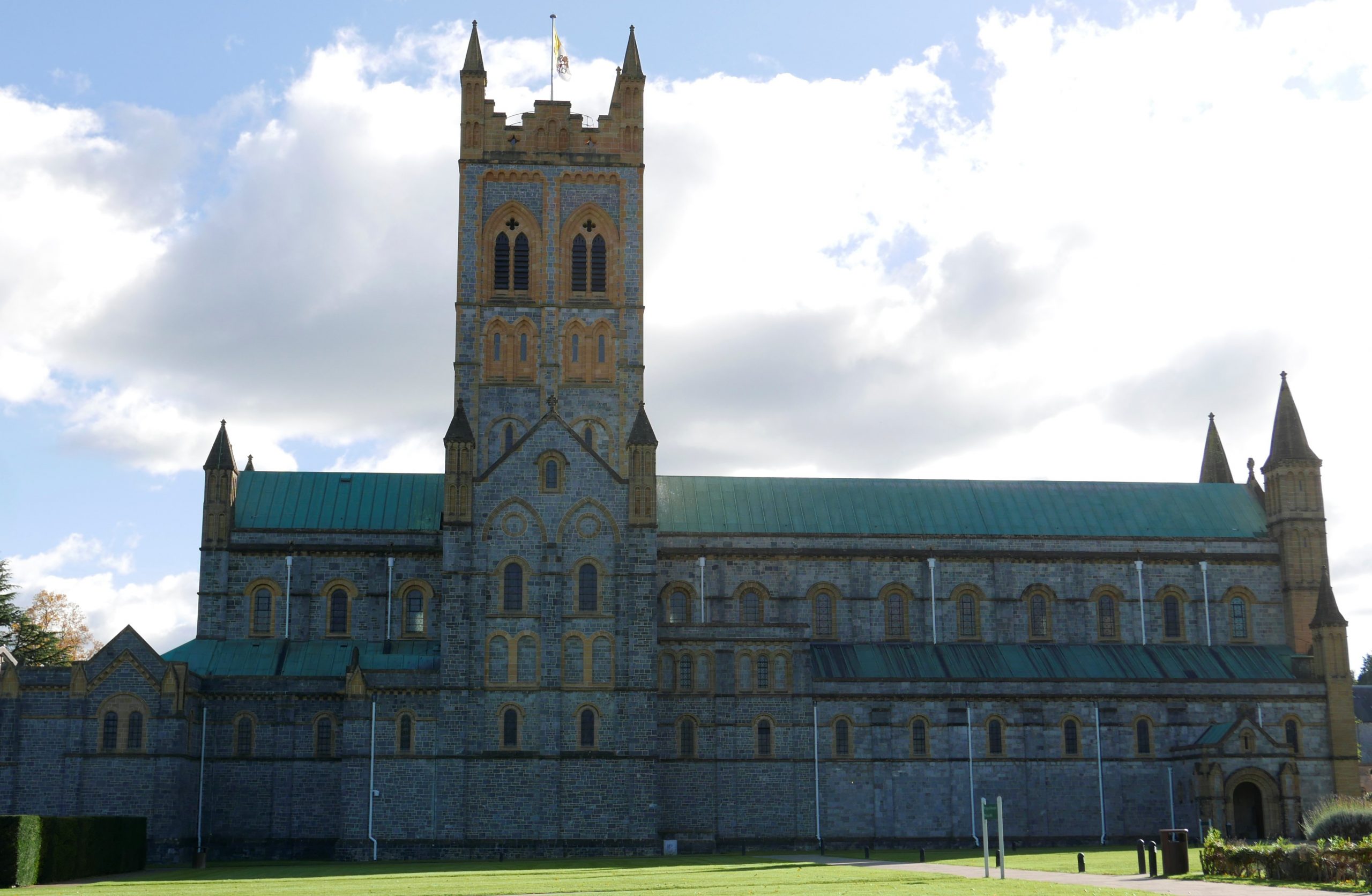
All the Abbots and Delegates of the monasteries and convents of the English Benedictine Congregation are meeting for the EBC General Chapter. This is usually held every four years; the current Chapter had to be postponed owing to Covid restrictions. General Chapter is an opportunity for all the houses in the EBC to debate how the monastic life is affected by changes in the wider world and how to keep monasticism relevant in today’s world.
We ask you to keep them in your prayers.
Praying with the Bible: Lectio Divina
Benedictine Institute Ealing Abbey
New groups beginning after Easter 2022
Meeting together monthly
Led by a member of the monastic community

For many people an occasional or regular shared prayerful reading of the sacred scriptures is helpful. For the insights of others may bring light and life. The group must be small enough and harmonious enough (though variety in age and background may enrich) for each participant to feel valued. An awareness of the presence of Christ and the leading of the Holy Spirit when ‘two or three are gathered together’ is the basic condition. The purpose is never to show off, but to build Christian community and the love of God.
Adapted from the CTS New Catholic Bible page 2245
Catholic Truth Society
The Benedictine Institute 74 Castlebar Road, Ealing W5 2DD
Tel 020 8862 2156
A work of Ealing Abbey registered charity no 242715